
Stump Grinding
The grinder chews the stump below grade so the lawn can be leveled, mulched, or replanted. Diameter, species, and root flare decide how much work is really there.
The Villages / Lady Lake / Leesburg / Wildwood / Summerfield, FL
Stumps around The Villages can interfere with mowing, irrigation, landscape beds, HOA cleanup expectations, and safe walking paths. Call or fill out the form when you want the stump gone or lowered. You can reach out before you know the exact root pattern, grinding depth, access path, or cleanup option.
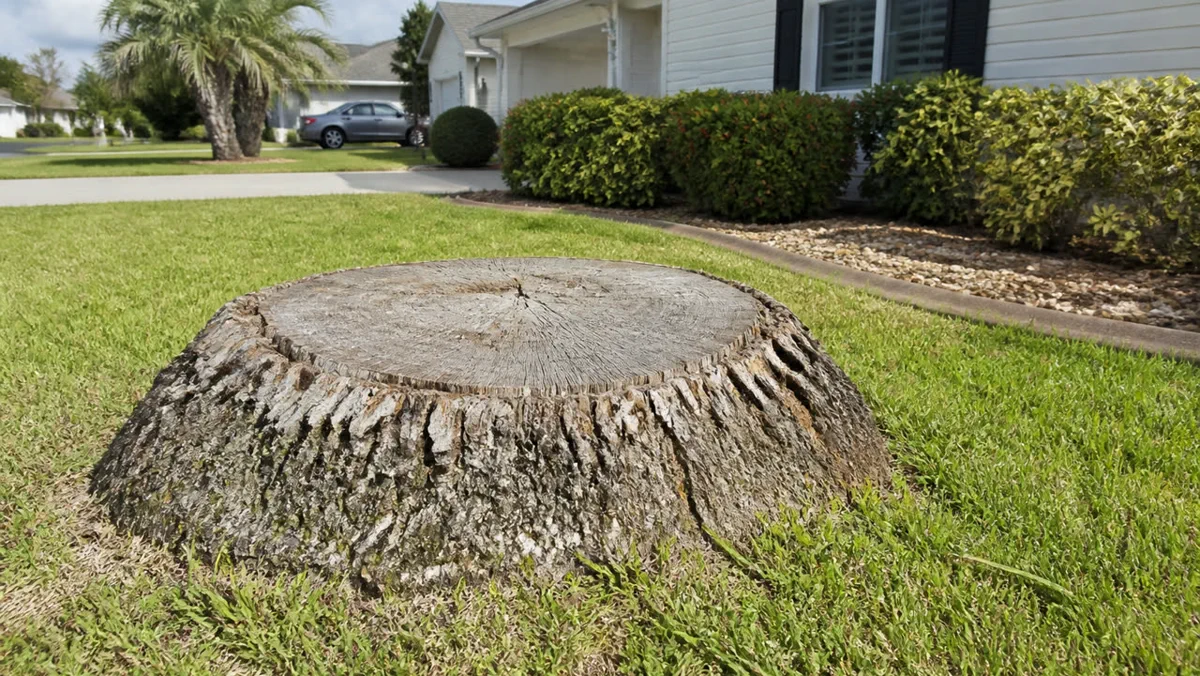
Stump grinding around The Villages is different from a wide-open rural lot. There are irrigation heads tucked close to trees, standard gates that do not forgive oversized machines, mature oak roots that wander farther than expected, and neighbors who notice when a pile of chips sits too long. The fixed picture is simple: stump gone below grade, chips managed, access respected, and a yard that stops catching mower blades.
The grinder chews the stump below grade so the lawn can be leveled, mulched, or replanted. Diameter, species, and root flare decide how much work is really there.
When you need the area cleaner than a basic grind, removal planning covers chip handling, fill, and whether the roots need extra attention near hardscape or beds.
Surface roots near fences, patios, or mower paths can be lowered carefully. The goal is safer access without tearing up half the yard to prove a point.
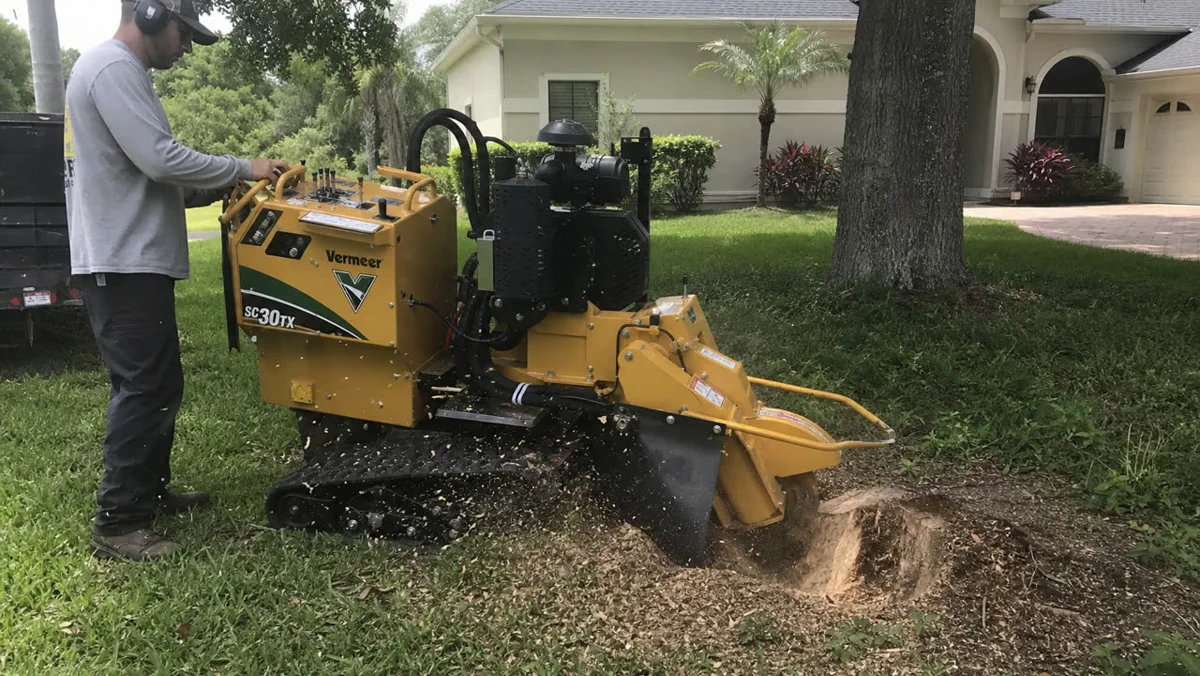
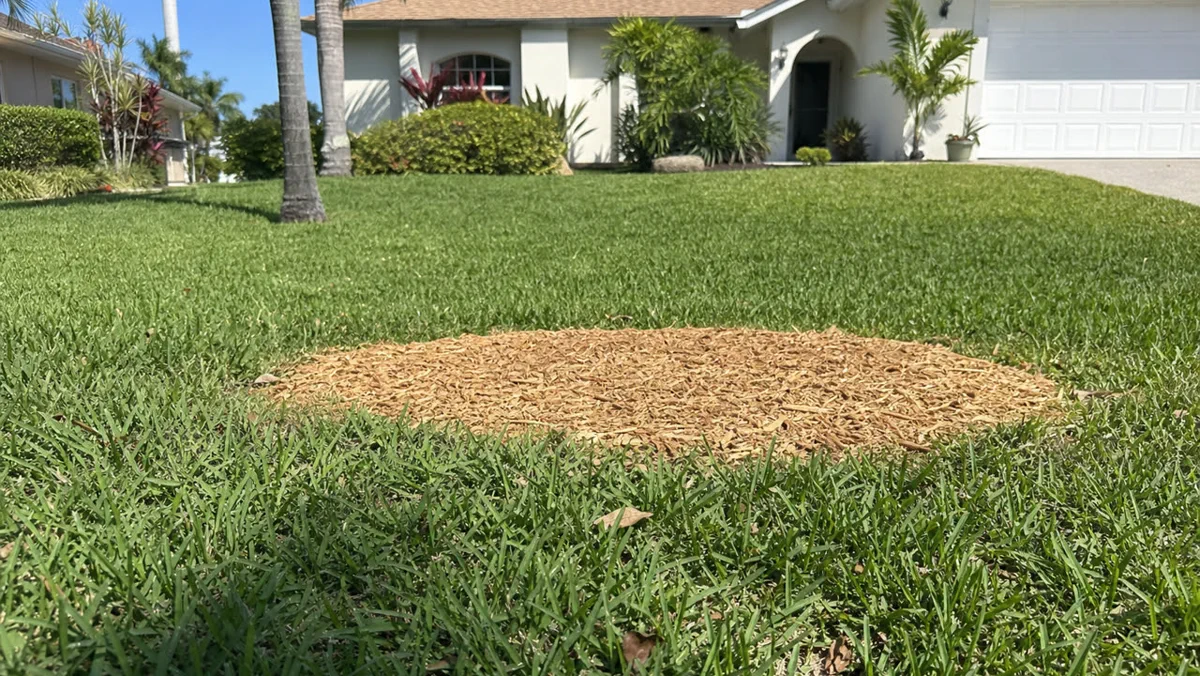
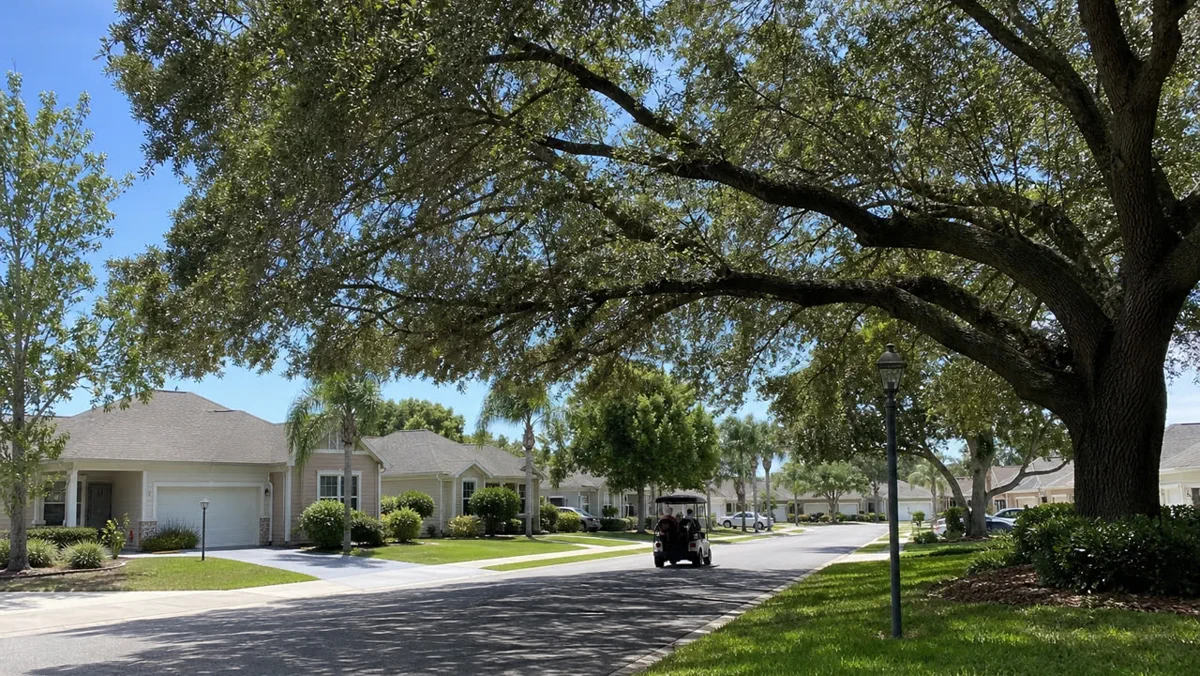
After stump grinding
A stump that draws HOA attention can be handled without turning the first call into homework. These are realistic planning examples for The Villages area yards, not a same-property before-and-after claim.
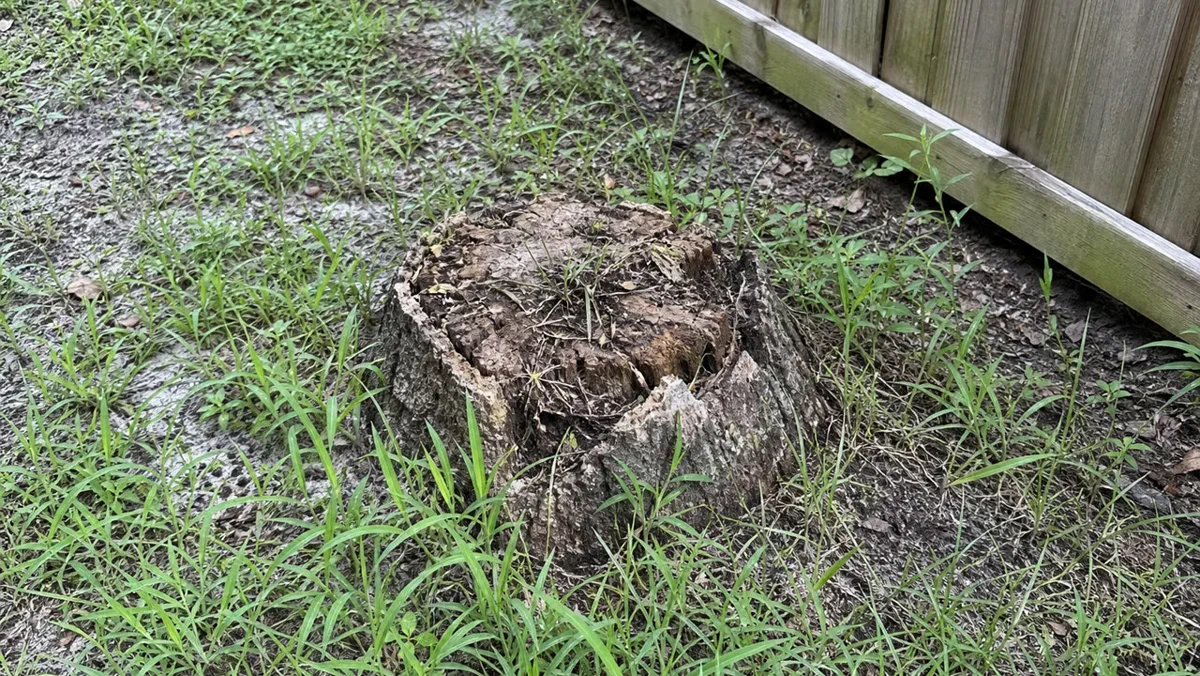
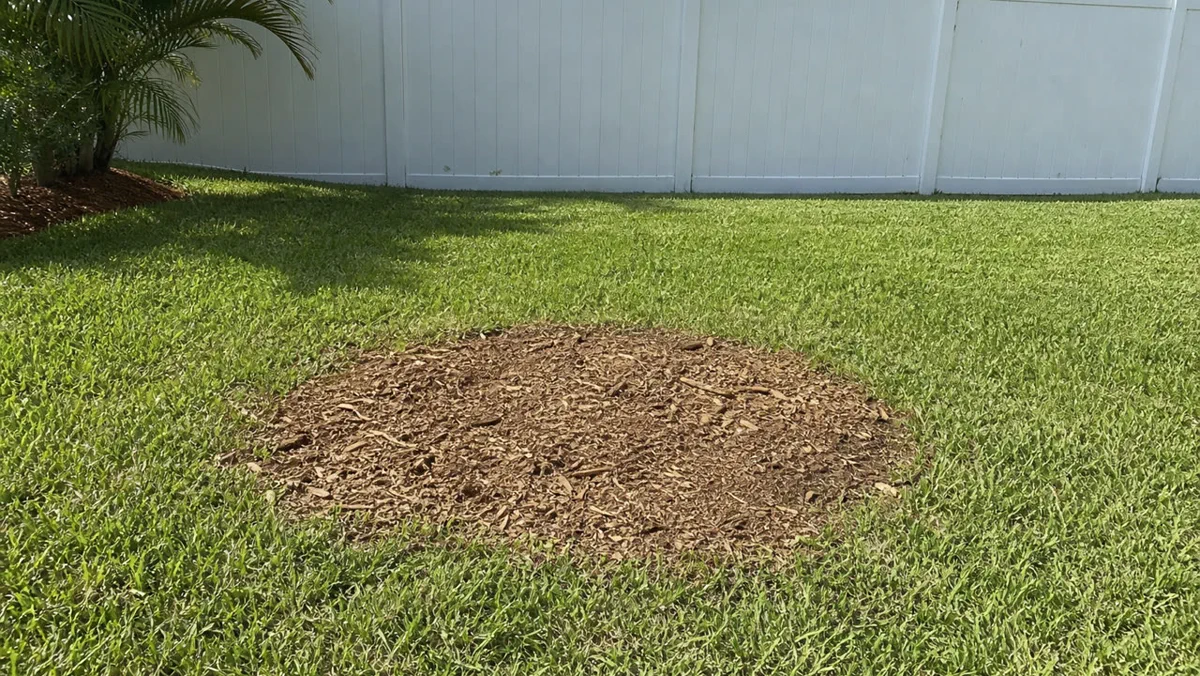
A standard stump grinding job removes the stump to 6-12 inches below ground level. That is deep enough for grass to grow over, a landscaping bed to be planted, or a paver to be set without the roots causing problems later. Root grinding goes deeper, typically 12-18 inches, and is the right call when roots run close to a fence post, irrigation line, or patio edge.
The most common stump in The Villages area is live oak. Live oak wood is dense and grinds slowly compared to pine or palm. A large live oak stump, 18 inches or more in diameter, can take an hour or more on its own. Slash pine stumps grind faster because the wood is softer. Sabal palms, Florida's state tree, are fibrous rather than hard wood, which means the grinding approach differs from a standard hardwood stump.
After grinding, the machine leaves behind a mix of wood chips and sawdust in the hole. That material compacts and breaks down over 6-12 months. For most yards, leaving the chips is the standard finish. When the yard needs to look finished quickly for a notice or sale, ask whether topsoil fill, seed, or chip removal should be included in the scope.
Stump sprouts are worth knowing about. Live oak and some other species will send up new growth from remaining roots if the stump is not ground low enough. A grind that stops at grade level is often not sufficient. If the area is being replanted, 8-10 inches below grade is the minimum worth specifying upfront.
Sandy Sumter and Lake County soil changes the root picture significantly. In clay soil markets, tree roots tend to stay compact and run deeper. In sandy soil, roots spread wider and shallower. A live oak with a 12-inch trunk on a Villages lot may have roots extending 15 feet or more in every direction, running just below the surface. That matters for scheduling: if the stump is near an irrigation zone, mention it before any work is scoped.
The Villages is one of the largest planned retirement communities in the world, with more than 130,000 residents across Sumter, Lake, and Marion counties. That means HOA and POA enforcement is consistent and active. Landscape maintenance notices are common, and a visible stump or chip pile can generate another HOA notice faster here than in most residential markets. Many residents want a clear plan before the next inspection cycle, especially when access, chips, irrigation, or visible front-yard cleanup could affect the result.
Golf cart access paths matter more in The Villages than almost anywhere else in Florida. Equipment has to arrive, access the stump, and leave without blocking cart paths or damaging turf paths that run between properties. Compact grinders at 34 inches wide fit through most standard 36-inch residential gates and most cart path access points. When the stump is behind a gate with a different width, or when the only access path crosses a landscaped area, that needs to be part of the scheduling discussion.
The tree stock in The Villages reflects both the original development era and ongoing planting programs. Properties developed in the 1980s and 1990s have mature live oaks that are now large enough to leave significant stumps when removed. Newer phases of development have younger trees. The age, size, and species of the stump plus the proximity to hardscape, irrigation, and property lines all affect what the job actually looks like on arrival.
Scheduling depends on provider availability, weather, access, and post-storm demand. If an HOA notice has a response deadline, you can mention it when you call, but you do not need a complete plan before asking for help.
On the follow-up call, the professional can ask about gate access, irrigation, cleanup expectations, and anything close to the stump. If you already know those details, mention them. If not, you can still reach out first and sort out the next steps during the call.
The job itself is straightforward on most residential lots. The grinder is positioned over the stump, and the cutting wheel works through the wood in sections. Most single stumps of average size are done in under two hours. The noise level is significant and the chips spray, so anything fragile or close to the work area should be moved or covered. Pets should be inside during the grind.
After grinding, the hole is usually filled with chip material, leveled, and left to compact when that is part of the agreed scope. If topsoil and seed are included in the agreed scope, those go on top of the chips. The area will look slightly raised for a few weeks as the chips compress, then settle to grade. For most Sumter and Lake County lawns, the area fills in naturally within one to two growing seasons without additional seeding.
The Villages Stump Grinding serves The Villages proper, Lady Lake, Leesburg, Wildwood, Summerfield, and Fruitland Park. Each area has its own access, soil, and HOA patterns. Mention your location and what you see around the stump when you get in touch, and we will sort the rest from there.
Every area has its own access, soil, wind, HOA, or scheduling factors. Pick your nearest page, call, or fill out the form; the follow-up can sort out the next steps.
Gate width, irrigation heads, and nearby beds can affect the equipment and cleanup plan. If you are unsure, call or use the form first and the follow-up can help narrow it down.
Gate and irrigation planningRain and saturated turf can affect scheduling. Ask how the area will be left if the lawn is wet or if access crosses a soft side yard.
Weather and scheduling expectationsFor replanting, ask how far below grade the stump may need to be ground and whether exposed roots also need attention.
Grinding depth before replantingStandard residential gates are often workable, but the access path still matters. Describe whether the stump sits behind a gate, bed, fence, or narrow side yard.
Access path and cleanupGrinding below grade helps remove the mower obstacle while leaving chips that can settle before final lawn repair or mulch work.
Mower clearance after removalIf an HOA or POA notice has a deadline, mention it early and ask what documentation can be provided after the stump is handled.
HOA documentation timingStump grinding pricing in Sumter and Lake County follows a consistent pattern. Most operators charge a base mobilization fee, typically $75-150, plus a per-inch rate based on stump diameter measured at ground level. Diameter is the single biggest cost driver. A 10-inch stump and a 24-inch stump are very different jobs even if they look similar from a distance.
Species matters too, though it is a secondary factor. Live oak is the densest hardwood commonly removed in The Villages area and takes the longest to grind per inch. Slash pine grinds faster. Sabal palm is fibrous and grinds differently than either. If you know the tree species, mention it; if you do not, the follow-up can still start with a plain-language description.
Root exposure adds time. A stump where the surface roots flare out significantly at the base takes longer than a clean trunk cut at grade. If roots have grown under pavers, a fence, or an irrigation line, that affects both the grinding approach and the cost. Share what you already know when you call; the rest can be discussed during follow-up.
Multiple stumps on the same property share the mobilization fee. Two stumps on the same lot are almost always cheaper per stump than two separate visits. Three stumps even more so. If you have been putting off a second or third removal because of the per-trip cost, a combined visit changes that math.
Cleanup add-ons: chip haul-away, topsoil fill, and overseeding are available at most operators and should be priced separately from the grind itself. For HOA-sensitive situations where the area needs to look finished quickly, the fill and seed option is worth the extra cost. For standard yard situations where the chips can break down naturally, the base grind is usually sufficient.
The Villages: The core community spans three counties and more than 130,000 residents. HOA and POA enforcement is consistent and active across all districts. Most stumps here come from mature trees planted in the 1980s-1990s development phases: live oaks, slash pines, and cabbage palms. Access through standard 36-inch residential gates is the norm, though some older properties have wider or narrower openings. POA landscape notices are the most common trigger for scheduling.
Lady Lake: The original gateway to The Villages, incorporated 1994. Mix of Villages-adjacent deed-restricted properties and older Florida residential lots. Some properties have mature citrus trees and orchard stumps from the agricultural history of the area. Lake Griffin and the surrounding lakes create sandy soil conditions that affect root spread. HOA enforcement is less uniform than Villages proper but still active in many neighborhoods.
Leesburg: A working city with older tree stock. Many properties have 40-60 year old oaks and pines that generate larger stumps when removed. Lake County soil varies between sandy and loam depending on proximity to the Harris Chain of Lakes. Less seasonal population fluctuation than The Villages area means year-round scheduling availability and less competition for appointment slots during fall and spring.
Wildwood: The commercial gateway to The Villages along US-301 and I-75. Rapid residential growth since 2010 means many newer construction lots with builder-planted trees now reaching removal size. Sumter County sandy soil, fast-draining, with roots that spread wide and shallow. The I-75 and Florida Turnpike interchange makes contractor access straightforward for equipment transport.
Summerfield: Marion County, just north of The Villages boundary. Mix of horse properties and residential lots with larger tree cover than the tighter Villages subdivisions. Some agricultural heritage in the area means old citrus stumps and windbreak tree line stumps are more common here than in the Villages proper. Less HOA density means more flexibility on scheduling timing and chip management.
Fruitland Park: On the south shore of Lake Griffin, with lakefront properties featuring mature cypress and live oak. Lake County jurisdiction. Some properties have lake-adjacent root systems that require careful grinding to avoid any waterline or riparian zone complications. Older established neighborhood with mature tree stock and larger stump sizes as a result.
Yes. Start with where the stump is and what you want the yard to look like afterward. Access, cleanup, and documentation questions can be sorted out during the follow-up call.
Compact grinders are about narrow enough for most residential gates and fit most standard 36-inch residential gates. If you already know gate or path details, share them. If not, you can still reach out and the follow-up call can sort out access before work is scheduled.
No major prep is required before you call. If you already know where irrigation heads are, share that during follow-up; if you are not sure, say so and ask how the area should be reviewed.
Wood chips are often left in the hole and leveled out, then the area settles over time. If you need a cleaner finish for an inspection, sale, or visible front yard, ask whether topsoil fill, seed, or chip removal should be included.
Usually one combined scope. The trip cost is shared, so a second stump often costs less than a separate visit. Share both sizes and locations so the stump response can account for them together.
Irrigation risk is lower when heads and known lines are discussed before work. If you know where they are, mention the location. If you do not, say so and ask how the area should be reviewed.
Call or use the form when the stump is in the way. You can reach out before you know the exact depth, access path, irrigation layout, or cleanup option. Those next steps can be sorted out during the follow-up call.
Request Stump Help